
Have you checked your website traffic lately and wondered where everyone went? You are not alone. Across the U.S., business owners are staring at Google Analytics and seeing the same thing. Traffic is flat or falling, even though rankings look fine. The reason is usually the same. Google’s AI Overviews now sit above the normal search results, and they answer the question before a person even scrolls down. This is the biggest shift in Google search in years, and it is hitting the Google AI Overviews SEO impact hard on almost every industry. This blog walks through why this is happening, how big the damage really is in 2026, and what you can actually do about it. No confusion, just a real guide.
What Are Google AI Overviews?
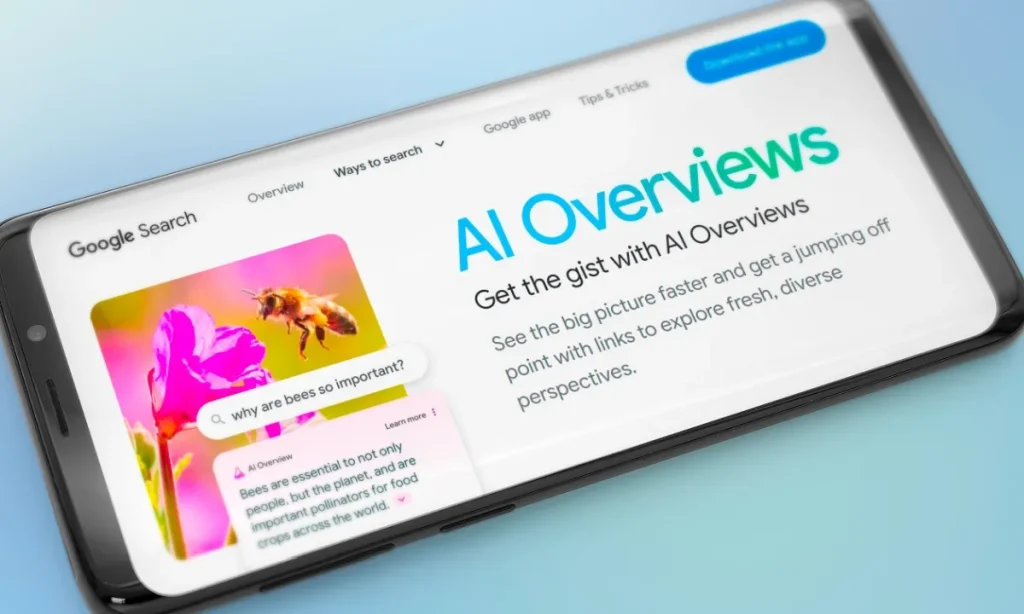
Google AI Overviews are AI-written summaries that show up right at the top of a search results page. Instead of ten blue links, Google now writes a short answer itself, pulling facts from several websites at once. The idea sounds simple. A person searches a question, and Google gives them the answer directly on the page. No clicking required. That is great for the searcher. It is not so great for the website that wrote the original content and gets none of the credit or visits.
In short, Google AI Overviews are AI-generated summaries that show up above normal search results. They pull answers from several websites, so people often don’t click through at all. Studies from 2026 show organic clicks drop between 34% and 61% once an AI Overview appears for a search.
Why Is Your Website Traffic Dropping Because of AI Overviews?
There isn’t just one reason your numbers are sliding. It’s really a mix of three things happening together, and each one chips away at the traffic you used to count on.
- Zero-Click Searches Are Rising
A zero-click search is exactly what it sounds like. Someone types a question into Google, reads the answer right there on the results page, and closes the tab. They never land on your site at all. This used to be rare. Now it’s becoming the normal way people search.
- Click-Through Rates Are Falling Fast
The Pew Research Center found that when an AI Overview shows up, only 8% of users click on any link at all. The percentage of users who do not click any link is closer to 15, almost double. Ahrefs looked at hundreds of thousands of keywords and found the same pattern. Even pages ranked in the very top spot were losing clicks fast.
- Informational Searches Get Hit the Hardest
Not every search suffers equally. Simple questions like “what is SEO” or “how to tie a tie” get summarized instantly, so there’s little reason left to click through. But searches that need real comparison, like choosing a service or making a big purchase, still send people to actual websites. People want more than a summary when money or a real decision is on the line.
How Big Is the Google AI Overviews SEO Impact in 2026?
The scale of this shift is bigger than most business owners realize. AI Overviews now show up on roughly 48% of all Google searches, up from just 13% a little over a year ago. That is nearly half of everything typed into the search bar. The click numbers tell the rest of the story. Some studies put the drop in organic click-through rate as high as 58% for the very top-ranking page once an AI Overview appears above it. Ranking first used to almost guarantee a click. That guarantee is gone now.
| Metric | Before AI Overviews | After AI Overviews |
| Click rate on results page | 15% | 8% |
| Position 1 click-through rate | Baseline | Down about 58% |
| Share of searches showing AI Overview | 13% | 48% |
Numbers like these are not just noise. They are the reason so many small business owners feel like their SEO stopped working, even when nothing about their website actually changed.
Which U.S. Websites and Content Types Are Losing the Most Traffic?
The damage isn’t spread evenly. Some types of U.S. websites are bleeding traffic fast, while others barely feel it.
News and Media Sites
News publishers have taken the hardest hit by far. Some U.S. outlets have reported losing 20% to 40% or more of their organic traffic as AI Overviews summarize breaking news right on the results page. Chartbeat data shows small publishers losing referral traffic from search at a much faster rate than large, well-known brands.
E-commerce and SaaS Websites
Product guides, “best of” lists, and general how-to content tend to lose clicks the fastest. But pages built for buying, like checkout pages or specific product listings, hold up much better. People still want to compare prices and read real reviews before they hand over their credit card.
Local Service Businesses
Here’s the good news for a lot of small U.S. businesses. Plumbers, dentists, lawyers, and similar local services are far less exposed. Someone searching “emergency plumber near me” still needs to click, call, or compare options before booking. An AI summary can’t fix a leaking pipe.
How Do You Know If AI Overviews Caused Your Traffic Drop?
Guessing isn’t necessary here. Google Search Console added a filter for this exact problem back in 2025, and most site owners don’t even know it exists yet. Open Search Console, go to the Performance report, and look under Search Appearance for the AI Overviews option. Turning that filter on shows you exactly which of your searches are triggering an AI Overview right now. From there, compare your clicks and impressions for those queries against the same period last year.
If impressions are steady but clicks have dropped hard, that’s the pattern. Your content is still being found. It just isn’t being clicked anymore, because the AI Overview above it is already giving people what they came for.
How to Fight Back: 6 Ways to Optimize for AI Overviews
None of this means giving up on Search engine optimization. It means changing how you write and structure content so AI tools, and real people, both find value in clicking through. Here’s what actually moves the needle.
- Answer the Question First
Don’t bury your answer under three paragraphs of backstory. Put the direct answer near the very top of the page, then explain the details after. This is exactly how AI Overviews pull information, and it also respects your reader’s time.
- Add Schema Markup (FAQ, Article, HowTo)
Schema is a bit of code that tells Google exactly what your content is about. Adding FAQ, Article, or HowTo schema makes it far easier for Google’s systems and AI tools to understand and pull from your page correctly.
- Build Real E-E-A-T Signals
Google and its AI systems favor content that shows real experience, not just information copied from somewhere else. Name your authors. Add real credentials. Share genuine insight that only someone who actually does this work would know. Generic advice gets summarized and skipped. Real expertise gets cited.
- Publish Original Data or Insights
AI tools are good at summarizing things that already exist everywhere. They are much less able to replace a fact, number, or insight that only your business has. Original research, even something small like results from your own client work, becomes a magnet for citations.
- Add an FAQ Section With Direct Answers
Write your FAQs the way people actually ask questions, then answer them plainly in a sentence or two. This format is exactly what AI systems look for when building a summary, and it gives you a real shot at being the source they pull from.
- Try an llms.txt File
This is a newer idea, and most sites haven’t set one up yet. An llms.txt file sits at the root of your domain, much like a robots.txt file, and points AI crawlers toward your best and most trustworthy content. It’s an easy way to get ahead while most competitors are still ignoring it.
Small local businesses that put real effort into these six areas often see stronger results.
Why Working With a Digital Marketing Partner Makes This Easier
Reading about schema markup and llms.txt files is one thing. Actually setting all of it up correctly, across dozens of pages, while also running a business, is another thing entirely. This is exactly the kind of shift where Brighton Ashbury Digital Marketing Agency USA helps U.S. businesses stay visible, whether that means fixing technical SEO issues, restructuring old content, or building the kind of E-E-A-T signals Google actually trusts. A second pair of expert eyes on your content strategy often finds gaps a busy owner simply doesn’t have time to catch.
What Does the Future of SEO Look Like With AI Overviews?
SEO isn’t disappearing. It’s just changing what winning looks like. The old goal was ranking number one. The new goal is getting cited, something people are starting to call Citation SEO.
Visibility Matters More Than Ranking
Success today means showing up somewhere across AI Overviews, featured snippets, and People Also Ask boxes, not just holding the top blue link. A page can rank well and still get almost no clicks if it isn’t the one AI chooses to quote.
AI Citations Bring Higher-Quality Traffic
When someone clicks through from an AI Overview, they’ve already read part of your answer and decided they want more. That visitor tends to trust the source more and convert at a higher rate than someone randomly scrolling ten blue links.
Authority Beats Content Volume
Publishing hundreds of thin, generic articles used to work. It doesn’t anymore. Fewer pieces, written with real depth and real expertise, now beat volume almost every time.
Brands Become the New Backlinks
Being mentioned, quoted, and recognized across the web, even without a direct link back, is starting to act like a trust signal on its own. A strong, consistent brand presence matters more than it used to.
Conclusion
AI Overviews are not going away. Pretending otherwise won’t protect your traffic. Right now, the businesses pulling ahead are the ones changing how they write and prove their expertise. The ones just waiting for this trend to reverse are falling behind. If your numbers have been sliding and you’re not sure where to start, Brighton Ashbury Digital Marketing Agency USA can walk through your site and show you exactly where the gaps are. The sooner you adjust, the faster your traffic starts working for you again.
Is SEO dead because of AI Overviews?
No. SEO is changing shape, not disappearing. Complex searches still send people to real websites. So do comparisons. So do big buying decisions. Businesses that build real expertise and shape their content the right way are still getting traffic in 2026.
How do I know if AI Overviews caused my traffic drop?
Go to Google Search Console. Open the Performance report. There is a filter called Search Appearance. Turn on AI Overviews there. You will see it. If impressions stayed steady but clicks dropped for those queries, an AI Overview is very likely the cause.
Can I block Google’s AI Overviews from using my content?
Not selectively. Blocking Google’s crawler entirely would also remove you from regular search results, which usually causes far more damage. A better move is to add a no snippet tag, though this limits your visibility in more places, not just AI Overviews.
Which type of content gets hurt the most by AI Overviews?
Simple, informational content gets hit hardest. Basic definitions, quick facts, and generic “what is” articles are the easiest for AI to summarize instantly. Deep comparisons, tutorials, and buying guides hold up much better.
Will my traffic ever come back after AI Overviews take my keywords?
Some of that old traffic likely won’t return in the same form. But businesses that restructure content, add real expertise, and aim for AI citations are already recovering visibility and, in many cases, gaining higher-quality visitors than before.