
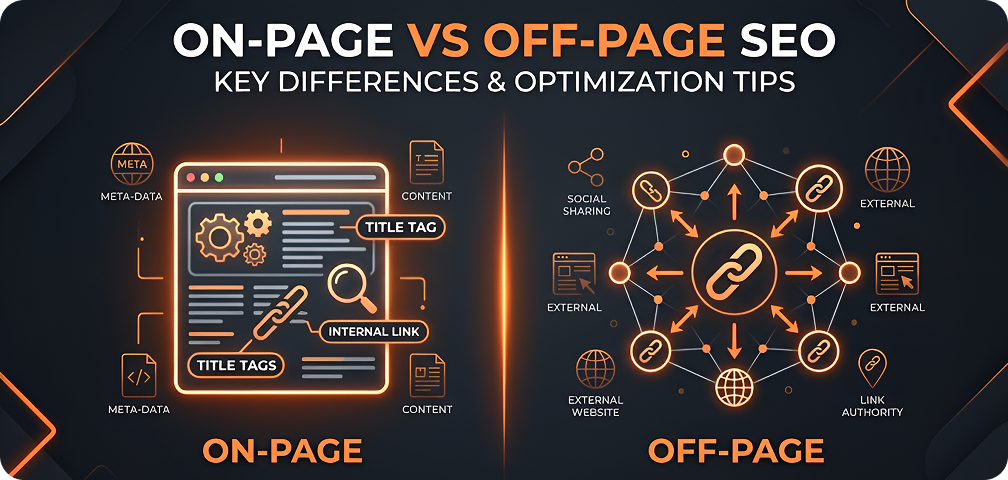
On-page and off-page SEO are two sides of the same coin. On-page SEO is all about what you can do on your own site. Titles, words, headings, and speed all come under on-page SEO. Off-page SEO is the part you can’t fully control. Links, mentions, and shares come from other people noticing your work. Lots of beginners get stuck thinking they have to do everything perfectly. Start small, fix a page, clean up your headings, and get a good link from trusted websites. The goal isn’t to be perfect, it’s to build a site that people and search engines can actually trust and understand. In this blog, you will learn the clear difference between on-page and off-page SEO, how they help your website, and easy tips to use them effectively.
Confused About SEO? Let’s Simplify It
Get a clear, actionable plan for improving your website rankings step by step.
What Is On-Page SEO?
On-page SEO is everything you change or improve on your own website. It’s the part where you have the most control. If you don’t like something, you can fix it. If a page feels weak, you can rewrite it. Search engines notice these things, and real people also like it. On-page SEO helps search engines understand what your page is about. It also helps visitors stay longer, read more, and feel comfortable on your site.
Even small businesses in small towns can use keyword research to appear in search results. Imagine a small coffee shop in Brighton wanting people to find them online. If they focus on SEO keyword research, they might rank for “best small coffee shop Brighton” rather than just “coffee shop,” which is way too broad. The difference is huge because it pulls in people who are actually nearby and ready to visit.
What Is Off-Page SEO?
Off-page SEO is what happens away from your website. You don’t fully control it. Off-page SEO is about trust. When other websites link to you or mention your brand, search engines see that as a good sign. It’s like someone recommending your business to a friend. One honest recommendation means more than ten random ones. This side of SEO takes time. It’s slower and sometimes messy. But it matters a lot, especially when many sites are competing for the same keywords.
On-page vs off-page SEO: Which is better
The following are the key differences between On-Page SEO and Off-page SEO:
- Primary Goal
- Control Over Optimization
- Focus Area
- On-page optimization vs link building
- Speed of Results
- Impact on Search Rankings
- Measurement and Tracking
Let’s discuss each difference in detail for better understanding.
How SEO Supports Law Firm Growth
1 Primary Goal
On-page SEO focuses on relevance and clarity. It helps match your content to what people search for. Off-page SEO focuses on authority. It shows that others find your site useful enough to mention.
2 Control Over Optimization
On-page SEO is in your hands. You can edit a title today and see changes soon after. Off-page SEO depends on others. You can reach out, share, and build relationships, but you can’t force anyone to link to you. That lack of control is frustrating, but it’s also why off-page signals matter so much.
3 Focus Area
On-page SEO focuses on single pages. Each page has its own job. Off-page SEO looks at your site as a whole. It’s about how the internet sees you, not just one page.
4 On-page optimization vs link building
On-page work includes content, headings, page speed, and layout. Off-page work includes backlinks, mentions, and online reputation. One is about building the page right. The other is about earning trust over time.
5 Speed of Results
On-page SEO can feel faster. Fix a broken page, and traffic may improve within weeks. Off-page SEO is slower. Links take time to earn, and trust builds gradually. It’s like planting a tree instead of changing a sign.
6 Impact on Search Rankings
On-page SEO tells search engines what your page is about. Off-page SEO helps decide how much that page should be trusted. Both matters alot. A great page with no trust struggles and a trusted site with weak content also struggles.
7 Measurement and Tracking
On-page SEO is tracked through rankings, traffic, and how people behave on your site. Off-page SEO is tracked through backlinks, referral visits, and brand mentions. Both tell different parts of the same story.
Not Sure Where to Start?
We’ll analyze your website and recommend the right SEO strategy for you.
On-page SEO vs off-page SEO: Comparison table
| Aspect | On-Page SEO | Off-Page SEO |
|---|---|---|
| Control | You fix it yourself. | Others decide. |
| Focus | One page. | Whole site. |
| Key Things | Content, keywords, headers, speed. | Links, mentions, shares. |
| Speed | Relatively Quick results. | Slow, takes time. |
| Ranking | Shows what the page is about. | Shows the site is trusted. |
| Goal | Be relevant. | Be credible. |
| Track | Traffic, clicks, time on page. | Links, mentions, referrals. |
On-page SEO benefits for business
Good on-page SEO starts with caring about the reader. Write like you’re explaining something to a friend, not teaching a class. Keep pages focused on one main idea. Avoid trying to rank for everything at once. Small things matter too. A clear title helps people click. A fast page keeps them from leaving.
Internal links help them explore without thinking too hard. Sometimes the best fix is removing clutter. Cutting long sentences. Removing old content that no longer helps. Simple changes often work better than big ones.
For a business, these steps do more than improve rankings. They make your website easier to use, help customers find what they need faster, and even encourage them to stay longer. Clear pages and helpful content build trust, which can lead to more calls, inquiries, or sales, all things a small business in the USA wants.
Off-page SEO strategies USA
Off-page SEO works best when it feels natural. Asking for links blindly rarely works. Sharing helpful content does. Building real connections helps more than chasing numbers. One good link from a trusted site is better than many weak ones. Focus on being useful, not impressive. Reviews, mentions, and shares all add up. None of them works alone, but together they slowly build a stronger online presence.
In the USA, businesses usually focus on strategies such as connecting with local directories, getting links from local blogs or industry sites, reviews on Google My Business, and sharing helpful content on social platforms. These steps build authority in your market, improve trust with customers, and make search engines notice your site.
How On-Page and Off-Page SEO Work Together
On-page SEO sets the base. Off-page SEO builds on top of it. Without good pages, links don’t help much. Without trust, great pages stay hidden. They support each other. When content is clear and helpful, people are more likely to link to it. When links bring new visitors, good on-page work keeps them staying. SEO works best when you stop treating these as separate jobs and see them as parts of the same effort.
Ready to Improve Your Rankings?
Let experts handle your SEO while you focus
on your business.
Conclusion
SEO isn’t about doing everything at once. It’s about steady improvement. Some days you fix a page. Other days, you earn a mention. None of it feels dramatic, but over time it adds up. On-page and off-page SEO both matter. Not because experts say so, but because that’s how the web works. Pages need to be clear. Sites need to be trusted. When both happen, results usually follow, quietly and slowly, just doing their job. In the USA, Brighton Ashbury, a digital marketing company help people to optimize webpages. Their expert team aduit your website and fix onpage and off-page SEO mistakes.
Frequently Asked Questions
1 What is the difference between on-page and off-page SEO?
On-page SEO is things you can change on your own website. Like words, titles, and page speed. Off-page SEO is things that happen outside your website.
2 How fast can I see results?
On-page SEO can show small results in a few weeks. Off-page SEO is slower. Links and mentions take time.
3 Can I do off-page SEO without on-page SEO?
Yes, you can try. But it does not work well. If your pages are messy or confusing, links do not help much. People visit and leave. It is better to fix your pages first.