
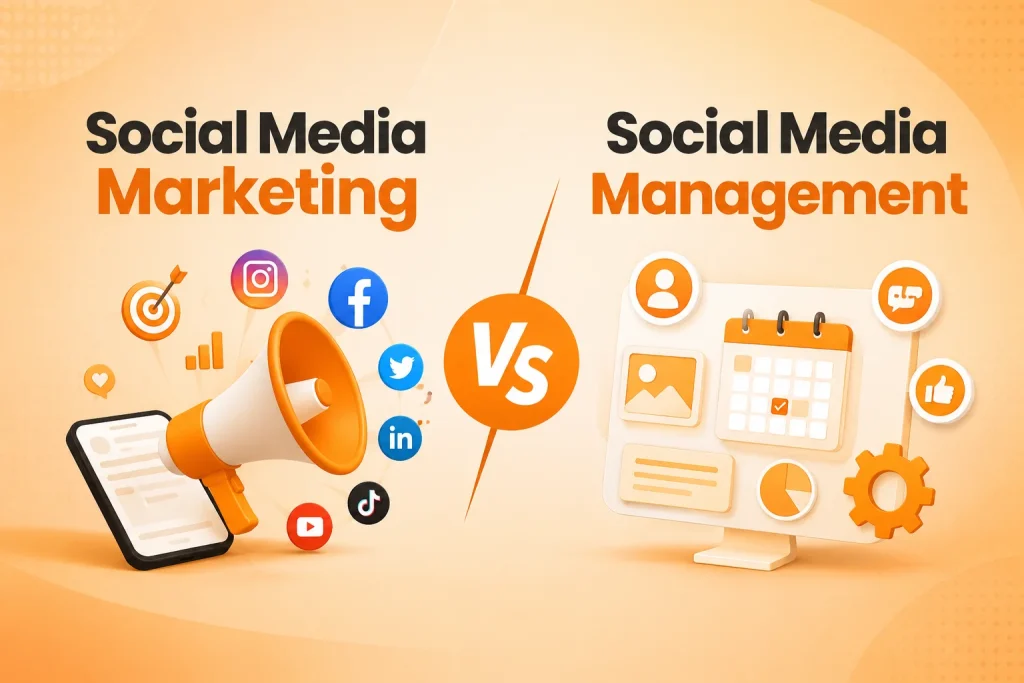
Most people in the US check a social app before they check their email. About 84% use YouTube, and almost seven in ten are on Facebook. Half the country is on Instagram too. Some scroll first thing in the morning. Others do it between meetings, or right before bed. With that much time spent on these platforms, it makes sense that businesses want to show up there too. But here is where things get challenging. Many business owners think social media marketing and social media management are the same thing. But in reality, they are not. One keeps your brand looking good and steady, like a shop that stays clean and welcoming every day. The other pushes an ad out to pull new customers through the door.
Mixing these two up isn’t just a small mistake. It can lead to wasted money, wrong expectations, and a business owner wondering why nothing seems to be working. In this blog, you will learn what social media marketing and social media management mean. You will also see how they work, what kinds of work belong to each one, and which one your business may need first.
What Is Social Media Marketing?
Social media marketing is just using places like Instagram, Facebook, or TikTok to get more eyes on a business. You post, people notice, and some of them end up becoming customers. It is not just posting for the sake of posting. It has a goal attached to it. That goal is usually more sales, more leads, or more people knowing your brand exists. Ads fall under this. So do sponsored posts and influencer deals. According to a HubSpot report, 26% of marketers plan to start selling directly through social media, including Instagram shops, in 2026.
Goals of Social Media Marketing
The main goals here are simple: get seen by new people, get clicks, and turn those clicks into paying customers. Some campaigns aim for brand awareness alone. Others go straight for sales. Either way, there is always a number attached at the end.
What Is Social Media Management?
Social media management is the day-to-day work of keeping your social profiles active and healthy. This means writing posts, replying to comments, answering messages, and making sure your brand sounds like the same brand across every platform. It’s quieter work. Less flashy. But it matters. A business with strong social media management feels alive online. People get replies. Comments don’t sit ignored for weeks. The whole page feels cared for. Based on HubSpot’s 2026 research: Nine out of ten social media marketers say building an active community is what actually makes a strategy work, not just posting for the sake of it.
What a Social Media Manager Does Day to Day
A social media manager plans posts ahead of time using a calendar. They check comments, answer questions, and sometimes deal with an unhappy customer publicly, calmly. They also keep an eye on which posts people like and which ones do not do much.
How Social Media Marketing Works
Social media marketing usually begins with a simple plan. A business picks one goal first. After that, the campaign starts to follow that one main goal. The ad gets written, and the right audience is selected. A budget is set. Then the campaign goes live. From there, someone keeps checking how it is doing and makes changes if needed. Clicks, cost per click, and conversions all get checked. Nothing stays fixed for long. The campaign often changes while it is still live, based on what the numbers are saying.
A Simple Example
Picture a small bakery that wants more weekend orders. They run a short ad showing a fresh batch of pastries, aimed at people nearby who like food pages. Within a few days, they can see exactly how many people clicked, and how many placed an order.
Why People in the US Mix These Two Up
Here is where a lot of businesses get tripped up. They hire someone for “social media help,” expecting sales to jump. But if that person was hired to manage the page, not market it, sales might not move much at all. Then the business owner feels let down, even though the person did exactly what they were hired to do. This mix-up costs real money. A business might pay for consistent posting and expect lead generation. Or they pay for an ad campaign and expect it to also handle every customer reply. Both are separate jobs, with separate skills behind them.
The confusion often shows up in the hiring stage. A business posts a job listing for “social media help” without clarifying which side of the work they actually need. The person they hire does their job well, but it’s the wrong job for what the business actually wanted. Knowing the difference upfront saves a lot of frustration later, and a lot of wasted budget too.
Social Media Marketing Vs Social Media Management
Below is a simple side-by-side look at how social media marketing and social media management compare across the areas that matter most to a small business.
| Feature | Social Media Management | Social Media Marketing |
| Main Goal | Build trust and a steady presence | Bring in leads and sales |
| Main Work | Posting, replying, scheduling | Running ads, campaigns, funnels |
| What Gets Measured | Likes, comments, response time | Clicks, conversions, cost per lead |
| Content Feel | Friendly, informative, everyday | Persuasive, offer-driven |
| Time Frame | Ongoing, never really “done” | Runs in set campaign periods |
| Common Tools | Scheduling and reply tools | Ad managers and tracking tools |
What is the Difference between Social Media Marketing and Social Media Management
The table above gives the short version. But the day-to-day reality looks a bit different depending on which side you’re standing on.
Daily Tasks Vs. Building a Campaign
A social media manager’s week might include writing next week’s posts, replying to five different comment threads, and hiding a spam message or two. A marketer’s week looks nothing like that. They might spend hours building out who should see an ad, testing two versions of the same ad against each other, and adjusting a budget that isn’t performing the way they hoped.
Growing Followers Vs. Buying Reach
Management usually grows an audience slowly, through organic posts that people share or comment on. It’s a long game. Marketing skips the wait. It pays to put content directly in front of new people who have never heard of the brand before, often far outside the current follower base.
Staying Visible Vs. Bringing in Money
Management keeps a brand looking active and trustworthy. That matters because people notice when a business page goes quiet. Marketing, on the other hand, gets judged by harder numbers. Did the campaign bring in orders? Did it pay for itself? Those answers matter more than likes.
Best Social Media Marketing Strategies in 2026
There is no single way to run social media marketing. Different goals call for different strategies, and most businesses end up mixing a few together.
Paid Ads and Boosted Posts
This is usually the quickest way to get seen. A business pays to push one post out to more people, then picks the group it wants to reach. That can be based on age, location, or what people like. The effect can start fast. Sometimes it takes only a few days, not weeks.
Content Campaigns
Sometimes the aim is not a quick sale. It is more about building attention little by little. A content campaign may run for a few weeks or longer, with posts that all connect to one idea or offer. Each post does a small part. By the time the main message appears, people are already familiar with it. It does not land all at once. It feels more gradual.
Working with Influencers or Creators
Some businesses partner with a creator who already has trust with an audience. The creator posts about the product, and that borrowed trust often converts better than a cold ad ever could.
How to Boost Your Social Presence through Social Media Management
Good management isn’t complicated, but it does take consistency. A few habits separate the brands that feel active from the ones that feel abandoned.
Post n a Regular Schedule
Random posting, then silence for two weeks, confuses an audience. A steady rhythm, even just a few times a week, builds trust over time.
Reply to Comments Quickly
People notice slow replies, and they notice fast ones too. Quick and honest responses make a brand feel like a human, original, and authentic.
Keep the Brand Voice the Same Everywhere
Whether it’s Instagram or Facebook, the tone should sound like the same business talking. Switching between formal and casual confuses people about who the brand actually is.
Which One Does Your Business Need First?
For most small businesses working with a tight budget, management usually comes first. It builds the foundation: a page that looks alive, trustworthy, and worth following. Once that foundation feels solid, marketing can be layered on top to actually push growth and bring in new customers. Skipping straight to marketing without any management in place often backfires. Imagine running an ad that brings a hundred new visitors to a page that hasn’t posted in three weeks and never replies to comments. Most of those visitors will click away without trusting the brand enough to buy anything. Getting the order right, management first, marketing after, tends to protect the money spent on both.
Conclusion
At the end of the day, social media marketing and social media management are two different jobs that work best together, not against each other. One keeps the lights on. The other pushes for growth. Businesses that understand this difference tend to spend their budget smarter and avoid the frustration of expecting the wrong results. If your business needs help figuring out where to start, or wants both sides handled properly, Brighton Ashbury works with businesses to build social media strategies that cover management and marketing together, so nothing gets left behind.
Do I need both social media marketing and social media management?
For steady, long-term growth, yes, most businesses eventually need both. Management keeps your presence trustworthy day to day, while marketing pushes for actual leads and sales on top of that foundation.
Can one person do both jobs for a small business?
It’s possible for a very small business, but it gets hard to do both well as things grow. Management and marketing use different skills, so many businesses eventually split the work between two people or teams.
Which one should I start with if I have a small budget?
Start with management. A page that looks active and gets replies builds trust first. Marketing works better once that foundation is already in place.
How do I know if I am paying for the wrong service?
If you hired someone expecting more sales but only got consistent posting, you likely paid for management, not marketing. Ask clearly what results are included before starting any service.